Slow Roast Leg of Lamb with Garlic, Rosemary, and Rich Gravy Recipe
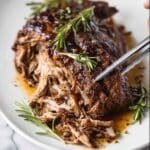
This Slow Roast Leg of Lamb recipe offers a tender, flavorful lamb dish cooked slowly until the meat easily falls off the bone. Using garlic, rosemary, and a flavorful broth, the lamb remains moist and infused with classic seasonings. This method is perfect for those who prefer well-cooked, succulent lamb rather than the traditional pink roast.
- Prep Time: 15 minutes
- Cook Time: 5 hours 15 minutes
- Total Time: 5 hours 30 minutes
- Yield: 8 servings
- Category: Main
- Method: Roasting
- Cuisine: Western
Ingredients
Meat and Seasoning
- 2.25 kg / 4.5 lb leg of lamb, bone in (or shoulder)
- Salt and pepper to taste
- 1.5 tbsp olive oil
Aromatics
- 1 whole garlic head, unpeeled, cut in half horizontally
- 1 onion, quartered (unpeeled is fine)
- 2 rosemary sprigs (adjust to 4 sprigs for stronger rosemary flavor)
Cooking Liquid
- 3 cups beef stock/broth, low sodium or homemade
- 2 cups water
Gravy
- 4 tbsp white flour
- 1 cup water
- Salt and pepper, to taste
Instructions
- Preheat Oven: Set your oven to 170°C / 335°F (standard) or 150°C for fan-forced ovens to prepare for slow roasting.
- Prepare Aromatics: Place the halved garlic, quartered onion, and rosemary sprigs in a metal roasting pan to provide flavor and a base for the lamb.
- Season Lamb: Position the lamb leg right side up in the pan. Generously season the top with salt and pepper, rubbing it well into the meat.
- Flip and Season Underside: Turn the lamb over so it mostly rests on the garlic and onion. Season the underside generously with salt and pepper, rubbing it in thoroughly for flavor infusion.
- Add Liquids and Cover: Drizzle olive oil over the lamb. Pour beef broth and water around the lamb—it won’t cover it completely, but the lamb will partially submerge. Cover the pan tightly with foil to allow the lamb to steam gently and stay moist.
- Slow Roast: Place the covered roasting pan into the oven and cook for 4.5 hours. This slow cooking breaks down the meat for a tender, pull-apart texture.
- Check Tenderness: Remove the pan, peel back the foil, and turn the lamb over. Test tenderness by prying meat with a fork or tongs; it should easily come off. If not tender enough, recover and return to the oven for more cooking.
- Browning: Uncover the lamb and roast for an additional 45 minutes to achieve a deeply browned, flavorful crust.
- Rest Lamb: Remove the lamb from the oven, spoon pan juices over it generously, and transfer to a serving platter. Loosely cover with foil and keep warm while preparing the gravy (up to 1.5 hours).
- Make Gravy – Skim Fat: Use a large spoon to skim excess fat from the cooking liquid in the roasting pan, discarding the fat.
- Add Flour and Reduce: Place the pan on medium-high heat on the stovetop until the liquid bubbles. Whisk in the flour carefully, allowing the mixture to thicken and reduce into a roux-like sludge over several minutes.
- Adjust Consistency and Season: Whisk in 1/2 to 1 cup water gradually until the gravy reaches your desired thickness. Season with salt and pepper to taste, rarely needing extra salt.
- Strain Gravy: Strain the gravy into a bowl, pressing juices out of the onion and other solids. Transfer to a gravy jug for serving.
- Serve: Use tongs to pull tender meat off the bone; serve hot with the prepared gravy spooned over the top.
Notes
- Lamb Cut: This recipe suits leg or shoulder cuts. Shoulder has more fat and can be roasted uncovered, but leg benefits from slow roasting partially submerged to prevent drying and amplify flavor.
- Meat Positioning: Roast the upper side (rounder, fattier side) of the leg partially submerged in liquid as it has more meat and fat, which keeps the lamb moist.
- Side Suggestion: Serve with truly crunchy roast potatoes for a complete meal.
- Additional Recipes: Explore variations like Ultra Tender Slow Cooker Roast Lamb, Slow Roasted Lamb Shoulder, Classic Roast Lamb with Gravy, or Slow Roasted Greek Leg of Lamb.
- Roasting Times: For different weights, round up to the nearest standard time (e.g., 1.8kg lamb cooks like 2kg).
- Nutrition Note: Calories are estimated higher because some fat is skimmed off before gravy preparation; actual calories per serving may be closer to 500.