
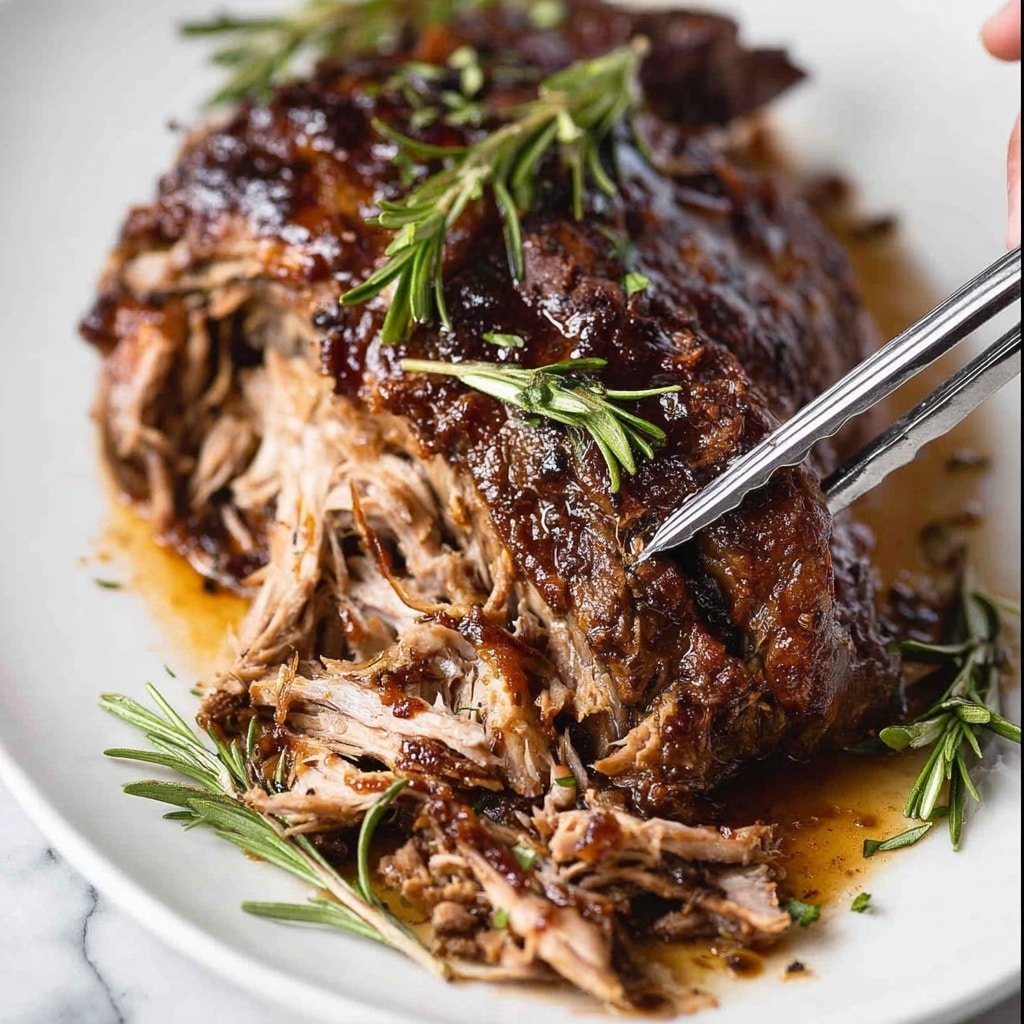
You know those dishes that instantly bring everyone to the table and hold their attention with just a smell? That’s exactly what this Slow Roast Leg of Lamb with Garlic, Rosemary, and Rich Gravy Recipe does for me. I first made this for a family gathering when I wanted something impressive but fuss-free. As the lamb slow-cooked in the oven, the kitchen filled with the warm aroma of garlic and rosemary, sparking hungry murmurs well before the meal began. When it finally came out, tender and fragrant, everyone was hooked — it’s one of those dinners that leaves a lasting memory.
Why This Recipe Shines
- Flavor Harmony: Garlic and rosemary mingle beautifully with the natural lamb aroma, creating a timeless flavor profile.
- Easy Assembly: Minimal prep, mostly hands-off slow roasting, perfect for busy cooks or special occasions.
- Texture Play: Slow cooking yields unbelievably tender meat that falls off the bone without drying out.
- Showstopper Finish: The final browning step adds a gorgeous crust and depth of flavor everyone notices.
What really sets this Slow Roast Leg of Lamb with Garlic, Rosemary, and Rich Gravy Recipe apart is its foolproof method. The lamb is slow-cooked partially submerged in broth, so it stays juicy and tender without needing constant attention. You get a rich, glossy gravy from the pan juices that’s perfect for mopping up every bite. The deep color of the crust, the subtle herbal notes, and the melt-in-your-mouth texture make it a real standout on the dinner table.
If you’re new to roasting leg of lamb or just want a reliable way to impress your friends, you’re in good hands. I’ll walk you through each step so your lamb comes out beautifully tender and packed with flavor every time. Plus, I’ll share tips to avoid common pitfalls — because this recipe deserves to shine on your first try, not just after a few experiments.
Ingredients You’ll Be Working With
Before we dive in, it helps to have your ingredients measured and ready. The exact amounts are detailed in the recipe card at the end, but here’s a quick rundown of what you’ll need and why each one matters.
- Leg of lamb: Look for a bone-in cut for best flavor and moistness; shoulder works too but has more fat.
- Salt and pepper: Simple seasoning that enhances the lamb’s natural flavor.
- Olive oil: Helps in browning and adds a touch of richness.
- Whole garlic head: Adds sweet roasted aromatics when slow-cooked with the meat.
- Onion: Provides depth and sweetness to the roasting liquid.
- Rosemary sprigs: Classic herb pairing that lifts the lamb’s earthiness.
- Beef stock or broth: Keeps the lamb moist, infuses flavor, and forms the base of the gravy.
- Water: Dilutes the broth to prevent it from getting too salty or intense.
- Flour: Thickens the pan juices into a rich gravy.
If you’re ever short on beef broth, chicken broth or a good-quality vegetable stock can work in a pinch — just keep an eye on salt levels when making the gravy.
Chef’s Note
You’ll find the complete list of ingredients with exact measurements in the printable recipe card at the bottom of this post.
Tools You’ll Need
- Large roasting pan: Holds the lamb and liquids comfortably for slow roasting.
- Aluminum foil: Essential for covering the lamb to trap moisture and steam during cooking.
- Sharp knife: For seasoning and trimming if needed.
- Tongs: Perfect for checking tenderness and serving the delicate meat.
- Whisk: To make smooth, lump-free gravy from pan juices.
- Meat thermometer (optional): Helpful if you want to check doneness, though tenderness is the best gauge here.
How to Make Slow Roast Leg of Lamb with Garlic, Rosemary, and Rich Gravy Recipe
Getting your Slow Roast Leg of Lamb with Garlic, Rosemary, and Rich Gravy Recipe just right is all about low and slow cooking combined with smart layering of flavors. Let’s break it down:
- Preheat and prep the pan: Set your oven to 170°C/335°F (standard) or 150°C fan. Spread garlic halves, onion quarters, and rosemary sprigs in the roasting pan as a flavorful base.
- Season the lamb: Pat the leg dry, then sprinkle generously with salt and pepper on both sides, rubbing it in well. Place it on the veggies with the meatier side down so it slow roasts partially submerged.
- Add liquids and cover: Drizzle olive oil over the lamb. Pour beef broth and water around the meat—don’t worry if it doesn’t cover fully; the lamb will sink in as it cooks. Cover tightly with foil to trap steam but allow some liquid evaporation.
- Slow roast: Pop it in the oven for about 4.5 hours. Check periodically by turning the lamb over and testing if the meat pulls away easily with a fork or tongs. If it’s still firm, give it more time covered.
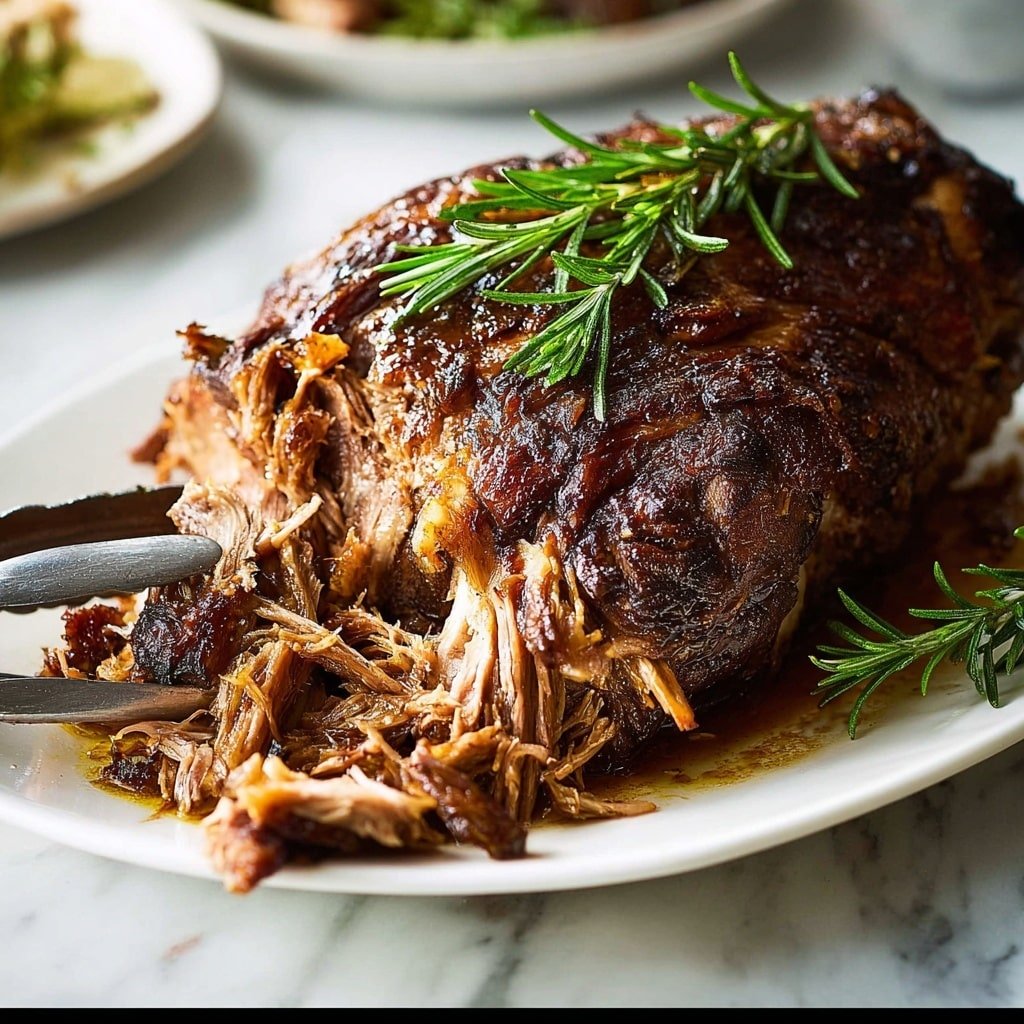
- Browning finish: Remove the foil, return the lamb uncovered to the oven, and roast for another 45 minutes or until it develops a deep, golden crust. This step adds wonderful flavor and texture contrast.
- Rest the meat: Take the lamb out, spoon pan juices over generously, and cover loosely with foil while you prepare the gravy. This resting period helps juices redistribute and keeps the meat warm.
- Make the rich gravy: Skim fat from the pan juices. Place the pan on the stove over medium-high heat. When bubbling, sprinkle in flour and whisk well until it thickens. Add water little by little until you get your preferred consistency. Season with salt and pepper and strain for a smooth finish.
Kitchen Wisdom
- Tip 1: Use a bone-in leg for juicier, more flavorful meat that holds together during slow cooking.
- Tip 2: Don’t rush the slow roast. The long cook at low temp is what makes the lamb fall apart tender.
- Tip 3: Keep the foil tight and cover during the slow roast to maintain moisture and infuse flavors.
- Tip 4: Save pan juices during resting — they’re liquid gold for your gravy and extra basting flavor.
How to Serve
Flavor Boosters
A sprinkle of finishing sea salt or a drizzle of good-quality extra virgin olive oil right before serving elevates the lamb’s natural flavors. If you like a bit of zing, a splash of lemon juice over the sliced meat brightens the richness without overpowering it. Fresh rosemary sprigs on the side add a lovely herbal aroma at the table.
Perfect Pairings
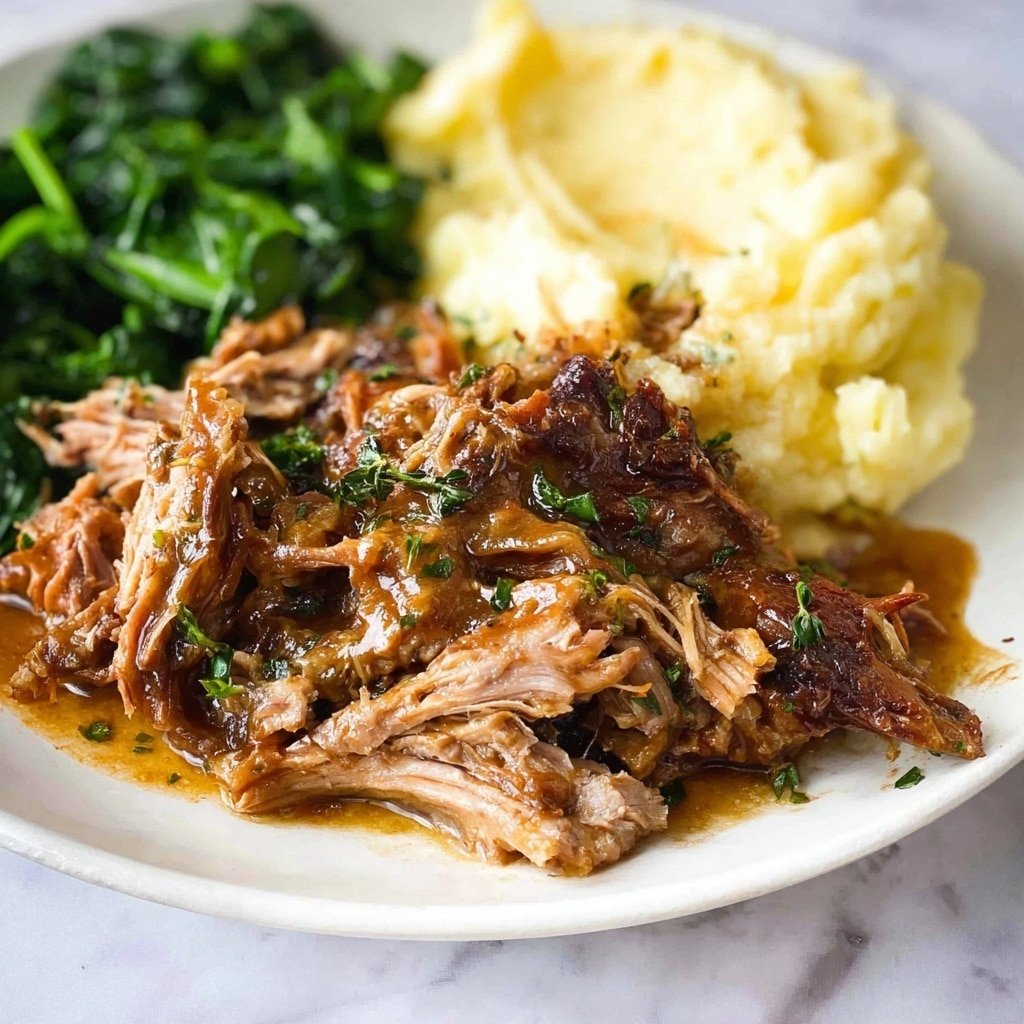
This slow roast leg of lamb pairs beautifully with crispy roast potatoes — I have a Truly Crunchy Roast Potatoes recipe that’s a crowd favorite. Braised greens, creamy mashed root vegetables, or a bright salad also balance the richness. For drinks, try a robust red wine like Shiraz or Malbec, or a well-rounded ale for a cozy match.
Presentation Touches
Because the meat is so tender, serving it family-style with tongs straight from the platter is a relaxed, inviting way to enjoy. For a more formal touch, carve larger slices from the browned top and fan them on a warm platter with gravy on the side. Leftovers (if any!) make incredible lamb sandwiches the next day.
Variations & Easy Swaps
- Substitute lamb shoulder for a fattier, more forgiving cut; adjust cooking time slightly.
- For extra depth, add a splash of red wine or balsamic vinegar to the broth mixture.
- Try fresh thyme or oregano along with rosemary for a different herb twist.
- Make the gravy gluten-free by using cornstarch instead of flour.
- Replace beef stock with mushroom broth for a vegetarian flavor boost if you want to keep the gravy meat-free.
Make-Ahead, Storage & Reheating
- Make the lamb a day ahead; the flavors deepen overnight. Reheat gently in a covered dish with a splash of broth or water to keep moist.
- Store leftover gravy separately in the fridge for up to 3 days; reheat on low and whisk to restore smoothness.
- Freeze sliced leftover lamb wrapped tightly for up to 3 months; thaw in the fridge overnight before reheating.
- To reheat, avoid high heat which can dry out the meat; gentle oven or stovetop with lid on works best.
FAQs
Q: Can I cook this lamb at a higher temperature to save time?A: It’s best not to. The slow low-and-slow method is what breaks down the lean meat into tender, juicy bites. Cooking higher and faster risks tough, dry lamb.
Q: How do I know when the lamb is done?A: Forget the thermometer here; the best test is tenderness—when you can easily pull the meat apart with tongs or a fork, it’s ready. If it’s still firm, it needs more time.
Q: Can I use boneless lamb leg?A: You can, but bone-in keeps the meat moist and adds flavor. If using boneless, keep a close eye on cooking time to avoid drying out.
Q: Is it okay if the lamb isn’t fully submerged in the liquid?A: Yes, the lamb will sink partially and the steam trapped under the foil helps keep it moist. The broth and aromatics infuse flavor during roasting.
Q: Can I prepare this in a slow cooker instead of an oven?A: Absolutely! Use the same ingredients and slow cook on low for 6–8 hours, then finish by broiling to brown the outside.
PrintSlow Roast Leg of Lamb with Garlic, Rosemary, and Rich Gravy Recipe
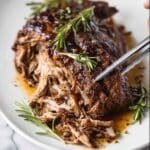
This Slow Roast Leg of Lamb recipe offers a tender, flavorful lamb dish cooked slowly until the meat easily falls off the bone. Using garlic, rosemary, and a flavorful broth, the lamb remains moist and infused with classic seasonings. This method is perfect for those who prefer well-cooked, succulent lamb rather than the traditional pink roast.
- Prep Time: 15 minutes
- Cook Time: 5 hours 15 minutes
- Total Time: 5 hours 30 minutes
- Yield: 8 servings
- Category: Main
- Method: Roasting
- Cuisine: Western
Ingredients
Meat and Seasoning
- 2.25 kg / 4.5 lb leg of lamb, bone in (or shoulder)
- Salt and pepper to taste
- 1.5 tbsp olive oil
Aromatics
- 1 whole garlic head, unpeeled, cut in half horizontally
- 1 onion, quartered (unpeeled is fine)
- 2 rosemary sprigs (adjust to 4 sprigs for stronger rosemary flavor)
Cooking Liquid
- 3 cups beef stock/broth, low sodium or homemade
- 2 cups water
Gravy
- 4 tbsp white flour
- 1 cup water
- Salt and pepper, to taste
Instructions
- Preheat Oven: Set your oven to 170°C / 335°F (standard) or 150°C for fan-forced ovens to prepare for slow roasting.
- Prepare Aromatics: Place the halved garlic, quartered onion, and rosemary sprigs in a metal roasting pan to provide flavor and a base for the lamb.
- Season Lamb: Position the lamb leg right side up in the pan. Generously season the top with salt and pepper, rubbing it well into the meat.
- Flip and Season Underside: Turn the lamb over so it mostly rests on the garlic and onion. Season the underside generously with salt and pepper, rubbing it in thoroughly for flavor infusion.
- Add Liquids and Cover: Drizzle olive oil over the lamb. Pour beef broth and water around the lamb—it won’t cover it completely, but the lamb will partially submerge. Cover the pan tightly with foil to allow the lamb to steam gently and stay moist.
- Slow Roast: Place the covered roasting pan into the oven and cook for 4.5 hours. This slow cooking breaks down the meat for a tender, pull-apart texture.
- Check Tenderness: Remove the pan, peel back the foil, and turn the lamb over. Test tenderness by prying meat with a fork or tongs; it should easily come off. If not tender enough, recover and return to the oven for more cooking.
- Browning: Uncover the lamb and roast for an additional 45 minutes to achieve a deeply browned, flavorful crust.
- Rest Lamb: Remove the lamb from the oven, spoon pan juices over it generously, and transfer to a serving platter. Loosely cover with foil and keep warm while preparing the gravy (up to 1.5 hours).
- Make Gravy – Skim Fat: Use a large spoon to skim excess fat from the cooking liquid in the roasting pan, discarding the fat.
- Add Flour and Reduce: Place the pan on medium-high heat on the stovetop until the liquid bubbles. Whisk in the flour carefully, allowing the mixture to thicken and reduce into a roux-like sludge over several minutes.
- Adjust Consistency and Season: Whisk in 1/2 to 1 cup water gradually until the gravy reaches your desired thickness. Season with salt and pepper to taste, rarely needing extra salt.
- Strain Gravy: Strain the gravy into a bowl, pressing juices out of the onion and other solids. Transfer to a gravy jug for serving.
- Serve: Use tongs to pull tender meat off the bone; serve hot with the prepared gravy spooned over the top.
Notes
- Lamb Cut: This recipe suits leg or shoulder cuts. Shoulder has more fat and can be roasted uncovered, but leg benefits from slow roasting partially submerged to prevent drying and amplify flavor.
- Meat Positioning: Roast the upper side (rounder, fattier side) of the leg partially submerged in liquid as it has more meat and fat, which keeps the lamb moist.
- Side Suggestion: Serve with truly crunchy roast potatoes for a complete meal.
- Additional Recipes: Explore variations like Ultra Tender Slow Cooker Roast Lamb, Slow Roasted Lamb Shoulder, Classic Roast Lamb with Gravy, or Slow Roasted Greek Leg of Lamb.
- Roasting Times: For different weights, round up to the nearest standard time (e.g., 1.8kg lamb cooks like 2kg).
- Nutrition Note: Calories are estimated higher because some fat is skimmed off before gravy preparation; actual calories per serving may be closer to 500.